Electrical Fault Finding Dublin How Diagnosis Actually Works
When lights flicker, sockets die, or a circuit keeps tripping, the real problem is often hidden. Electrical fault finding Dublin is the process of systematically locating the cause rather than just resetting a breaker and hoping for the best. This guide explains how a registered electrician diagnoses faults in a typical Dublin home, what tests are used, and what the work usually costs.
Common Electrical Faults in Dublin Homes
Most call-outs involve one of these issues:
- Circuit breakers or RCDs that trip repeatedly
- Dead sockets or lights on one circuit
- Flickering or dimming lights
- Burning smells near sockets or the consumer unit
- Partial power loss in part of the house
These symptoms can come from overloaded circuits, damaged insulation, water ingress, loose connections, or failing appliances. The goal of proper fault finding is to identify the root cause so the repair lasts.
How Electricians Find the Fault – Step by Step
Professional diagnosis follows a clear sequence. This is the approach used by Safe Electric registered contractors working to the National Rules for Electrical Installations (I.S. 10101).
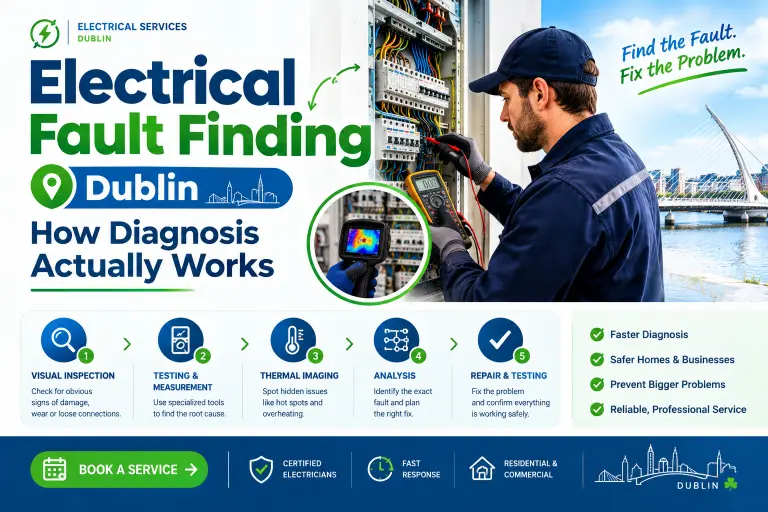
1. Information gathering
The electrician asks when the problem started, what was happening at the time, and whether it is intermittent or constant. Details about recent work, weather, or new appliances often point to the cause quickly.
2. Visual inspection
They check the consumer unit for scorch marks, loose connections, or incorrectly rated breakers. Accessible sockets, switches and light fittings are examined for damage or overheating.
3. Safe isolation
Power is isolated and proved dead before any testing begins. This protects both the electrician and the installation.
4. Systematic testing
Key tests include:
- Continuity of protective conductors (to confirm the earth path is intact)
- Insulation resistance testing (usually at 500 V DC) to detect breakdown between live, neutral and earth
- Earth fault loop impedance to verify the protective device will operate correctly under fault conditions
- RCD operation testing to confirm trip times meet the required limits
If a whole group of circuits is affected, the half-split method is often used. Circuits are isolated in stages until the faulty section is narrowed down.
5. Locating the exact point
Once the faulty circuit is identified, further testing or cable tracing may be needed to find the precise location (for example a damaged cable in a wall or a failed accessory).
6. Repair and verification
After the fault is fixed, the relevant tests are repeated to confirm the installation is safe before power is restored. If the problem is repeated tripping, our related guide on circuit breaker tripping in Dublin covers the most common causes in more detail.
Tools Used During Diagnosis
Electricians rely on calibrated test instruments rather than guesswork. Typical equipment includes:
- Multifunction tester for insulation resistance, continuity and loop impedance
- RCD tester
- Multimeter
- Socket tester
- Sometimes a thermal imaging camera or cable tracer for harder-to-find faults
These instruments allow accurate readings against the limits set out in the wiring rules.
How Much Does Electrical Fault Finding Cost in Dublin?
There is no single fixed price because the time required varies. Typical 2026 ranges are:
| Item | Typical Range | Notes |
|---|---|---|
| Call-out / first hour | €80 – €180 | Often includes initial diagnosis |
| Hourly rate after call-out | €60 – €100+ | Higher for complex or out-of-hours |
| Simple fault (found quickly) | Often resolved within the first hour | Materials extra if needed |
| Complex or intermittent fault | Additional hours | May require return visits |
Straightforward faults such as a failed socket or a single overloaded circuit are frequently sorted in the first visit. Intermittent problems or faults buried in walls take longer. Always ask for a clear explanation of the call-out terms before the electrician arrives.
For broader residential electrical support, see our main electrician service Dublin page.
What You Can Safely Check Yourself
Before calling, you can:
- Note which breakers or RCDs are tripping
- Unplug appliances on the affected circuit and try resetting
- Check if the problem is limited to one room or the whole house
Do not open the consumer unit, remove fittings, or attempt insulation testing yourself. Incorrect testing can damage equipment or create a safety risk.
When to Call Immediately
Contact a registered electrician without delay if you notice:
- Burning smells or discoloured sockets
- Sparks or buzzing from fittings
- Warm or hot switches and sockets
- Repeated tripping that cannot be isolated to one appliance
These signs can indicate a developing fire risk.
Frequently Asked Questions
How do electricians find an electrical fault in a house?
They gather symptoms, carry out a visual inspection, isolate the supply, then use insulation resistance, continuity, loop impedance and RCD tests to locate the fault systematically.
How much does electrical fault finding cost in Dublin?
Most call-outs start between €80 and €180, often including the first hour. Additional time is charged hourly. Complex faults cost more.
What is electrical fault finding?
It is the structured process of identifying the exact cause of an electrical problem rather than simply resetting protective devices.
How to locate an electrical fault?
Professionals use a combination of information from the homeowner, visual checks, and calibrated electrical tests. DIY methods are limited and can be unsafe.
How much does a periodic electrical inspection cost in Ireland?
A full periodic inspection and report for a typical house is usually quoted separately from fault-finding call-outs and depends on the size of the property.
Best emergency electrician for fault finding in Dublin?
Choose a Safe Electric registered contractor who responds promptly and explains the diagnosis clearly. Registration can be checked on the official Safe Electric website.
How to fix a tripping circuit breaker in Dublin?
First unplug appliances and reset once. If it trips again, stop and call an electrician. Persistent tripping needs proper testing rather than repeated resets.
Final Advice
Good fault finding saves time and prevents repeat call-outs. A registered electrician will explain what they found, show the test results if requested, and only replace what is necessary. If you are dealing with repeated trips, dead circuits or unexplained power loss, a proper diagnosis is the safest next step.
Contact us for clear, practical electrical fault finding across Dublin.