What Counts as an Electrical Emergency in Dublin?
If you notice a burning smell, sparks, exposed live wires, repeated circuit breaker trips, flooding near electrical systems, or a complete power loss affecting only your property, treat it as an electrical emergency. These faults can increase the risk of fire or electric shock and should be checked by a qualified electrician without delay.
Why Some Electrical Problems Can’t Wait
Not every electrical fault needs an urgent call-out, but some situations should never be ignored. A small issue can quickly turn into a serious safety risk if damaged wiring, overheating, or moisture is involved.
Electrical emergencies often happen without warning. A consumer unit may begin buzzing, a socket may produce sparks, or the power may suddenly fail while neighbouring homes remain unaffected. In these cases, the priority is safety, not restoring power as quickly as possible.
Older homes across Dublin are more likely to develop hidden electrical faults because wiring, fuse boards, and electrical panels naturally wear over time. Home extensions, ageing circuits, overloaded sockets, and poor-quality past repairs can also increase the risk of sudden failures.
If you notice heat, smoke, burning smells, repeated breaker trips, or exposed wiring, isolate the affected circuit if it is safe to do so and arrange a professional inspection. Delaying repairs can increase damage and make the fault more expensive to fix.
For problems affecting only your property, a qualified Emergency Electrician Dublin can identify the cause safely. If you need planned repairs or upgrades after the emergency is resolved, professional Electrician Services can help reduce the risk of future faults.
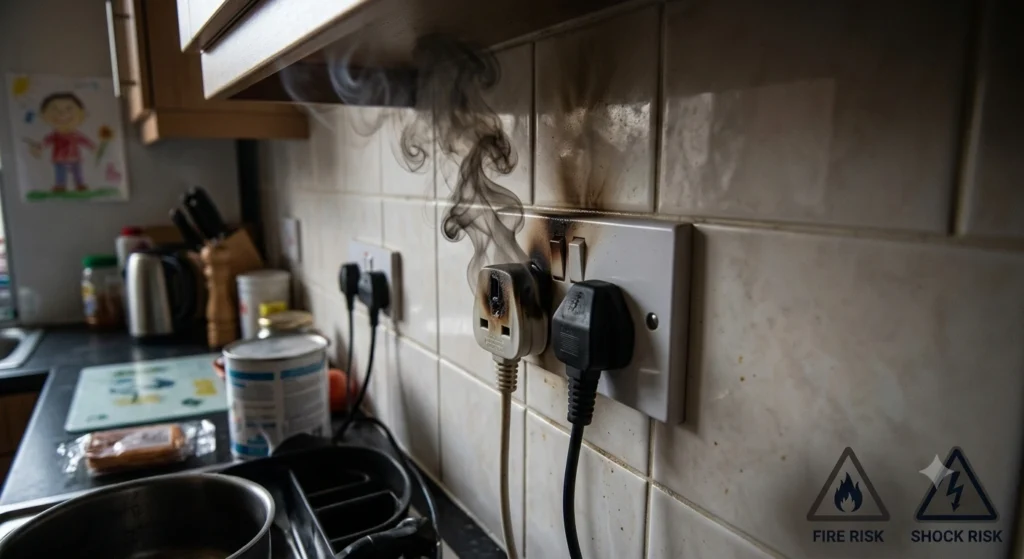
What Is Considered an Electrical Emergency?
An electrical emergency is any fault that creates an immediate risk of electric shock, fire, injury, or complete loss of power within your property. These situations require prompt attention because they can become dangerous within minutes.
Typical emergencies include:
- Burning smells from the sockets or the consumer unit
- Smoke or scorch marks near electrical equipment
- Sparking switches or outlets
- Exposed live cables
- Electrical shocks from appliances
- Floodwater reaching electrical installations
- Continuous circuit breaker trips
- Complete power loss affecting only your property
Problems such as a single faulty light fitting or one broken socket are usually inconvenient rather than dangerous. Understanding the difference helps you decide whether you need an emergency visit or a standard appointment.
8 Situations That Need an Emergency Electrician Immediately
1. Burning Smell from a Socket or Consumer Unit
A burning plastic or electrical smell is one of the clearest warning signs of overheating. Loose connections, damaged wiring, or overloaded circuits can generate enough heat to start an electrical fire.
Turn off the affected circuit if it is safe and avoid using nearby outlets until an electrician has completed fault-finding.
2. Sparking Outlets or Switches
A small spark when plugging in an appliance can sometimes occur, but continuous sparking, crackling sounds, or visible flashes are not normal.
These symptoms often point to damaged wiring, loose terminals, or electrical arcing inside the socket. Stop using the outlet immediately.
3. Complete Power Loss Inside Your Property
If your entire house loses power but neighbouring properties still have electricity, the problem is likely inside your own electrical installation.
The fault could involve the main switch, electrical panel, damaged wiring, or another component requiring professional diagnosis.
4. Circuit Breaker Keeps Tripping
Circuit breakers are designed to protect your home. If the breaker trips repeatedly after one careful reset, it is responding to an active fault rather than a temporary overload.
Do not continue resetting it. The underlying issue may involve insulation damage, moisture ingress, or a short circuit. If testing shows the protective device has failed, a Circuit Breaker Installation Dublin may be required to restore safe operation.
5. Exposed Live Wires
Damaged cables, exposed conductors, or loose wiring create an immediate shock hazard.
Keep children, pets, and anyone else away from the affected area. Never attempt temporary repairs using electrical tape or household materials.
6. Flooded Electrical Systems
Water and electricity create a dangerous combination.
If flooding reaches sockets, electrical panels, consumer units, or extension leads, avoid entering the affected area until the power has been safely isolated. Even clean water can become electrically conductive.
7. Consumer Unit Buzzing, Smoking, or Overheating
A healthy consumer unit should operate quietly.
Buzzing sounds, excessive heat, smoke, or a burning smell often indicate loose connections or failing components inside the board. These faults require immediate inspection and may lead to an Electrical Panel Installation Dublin if the existing unit no longer meets modern safety standards.
8. Electric Shock from an Appliance or Socket
Even a mild electric shock should never be ignored.
The appliance may not be the actual problem. Faulty earthing, damaged wiring, or internal electrical faults can all cause dangerous voltage to reach metal surfaces.
Disconnect the appliance only if it is safe and avoid using the circuit until it has been tested.
5 Electrical Problems That Can Usually Wait Until Morning
Some electrical issues are inconvenient but do not always require an emergency call-out if there are no signs of overheating, smoke, or electrical damage.
These include:
- One socket has stopped working while the rest of the house operates normally.
- A light bulb has failed without burning smells or visible damage.
- A single lighting circuit flickers occasionally but shows no signs of overheating.
- A circuit breaker trips once because of an overloaded appliance and stays on after removing the appliance.
- An outdoor garden light has stopped working without affecting other circuits.
Although these faults may not require immediate attention, they should still be inspected before they become larger electrical problems.
If repeated faults occur, a qualified electrician can carry out electrical testing and recommend repairs or upgrades, including modern consumer units, safer wiring, or checking whether your system is ready for a Solar Panel Installation Dublin as part of future electrical improvements.

Emergency vs Non-Emergency Electrical Problems Comparison
| Situation | Emergency | Can It Wait? |
| Burning smell from the socket | Yes | No |
| Sparking outlet | Yes | No |
| Smoke from consumer unit | Yes | No |
| Exposed live wire | Yes | No |
| Floodwater near electrical equipment | Yes | No |
| Whole house without power (neighbours have electricity) | Yes | No |
| Circuit breaker keeps tripping | Yes | No |
| Electric shock from appliance | Yes | No |
| One faulty socket | Usually not | Yes |
| Burnt-out light bulb | Usually not | Yes |
| Outdoor light not working | Usually not | Yes |
| One flickering light without smell or heat | Usually not | Yes |
| One breaker trips once after appliance overload | Usually not | Yes |
This comparison helps homeowners decide whether an electrical fault needs immediate attention or whether it can safely wait for a scheduled inspection. When in doubt, arranging an inspection through a qualified electrician is always the safest option.
What Counts as an Electrical Emergency in Dublin?
What Should You Do Before the Electrician Arrives?
The first few minutes after an electrical fault can make a significant difference. Your priority should always be protecting people, not trying to identify or repair the fault yourself.
Safe Steps
If you notice burning smells, smoke, sparks, or unusual buzzing, switch off the main power only if you can safely reach the consumer unit. Never place yourself in danger to isolate the electricity.
Keep children, pets, and everyone else away from the affected area. If water is near sockets, switches, or electrical equipment, stay clear until the supply has been safely isolated.
Unplug appliances connected to the affected circuit only if the socket and plug show no signs of damage. Never touch exposed wiring or burnt electrical accessories.
Check whether neighbouring homes have also lost electricity. If nearby properties still have power, the fault is most likely within your own electrical installation.
Take clear photos of any visible damage and note what happened immediately before the fault occurred. This information helps speed up diagnosis during an Emergency Electrician Dublin visit.
If testing identifies damaged protective devices or an unsafe consumer unit, follow-up work may include a Circuit Breaker Installation Dublin or an Electrical Panel Installation Dublin. For ongoing maintenance and safety inspections, our Electrician Services Dublin team can also help.
What NOT to Do
Do not keep resetting a circuit breaker that repeatedly trips. It is usually responding to an active electrical fault rather than a temporary overload.
Never remove covers from sockets, switches, the consumer unit, or any electrical panel, even if the damage appears minor.
Avoid touching exposed wires or damaged electrical equipment, especially if you are standing on a wet floor or damp surface.
Do not ignore a burning smell simply because it disappears. Hidden overheating can continue inside walls, cables, or the consumer unit.
Never attempt DIY repairs during an electrical emergency. Professional fault-finding is always the safest option.
Should You Call ESB Networks or an Emergency Electrician?
Knowing who to contact can save valuable time during an electrical emergency. The correct choice depends on whether the fault is inside your home or part of the public electricity network.
| Problem | Who Should You Call? |
| Whole street has no electricity | ESB Networks |
| Downed overhead power lines | ESB Networks |
| Damaged electricity meter | ESB Networks |
| Only your home has no power | Emergency Electrician |
| Burning consumer unit | Emergency Electrician |
| Sparking socket or switch | Emergency Electrician |
| Circuit breaker keeps tripping | Emergency Electrician |
| Exposed internal wiring | Emergency Electrician |
A simple rule is to contact ESB Networks for issues affecting the public electricity supply. If the fault is limited to your home’s wiring, consumer unit, sockets, or switches, contact an emergency electrician.
Common Electrical Emergencies in Dublin Homes
Burning Smell
A burning plastic or electrical smell usually indicates overheated wiring, loose connections, or overloaded circuits. Turn off the affected circuit if it is safe and arrange an inspection immediately.
Sparking Outlet
Frequent sparking, crackling sounds, or scorch marks around a socket often indicate loose terminals or damaged wiring that requires urgent repair.
Consumer Unit Buzzing
A consumer unit should operate quietly. Buzzing, humming, or excessive heat may indicate loose connections, overloaded circuits, or failing internal components.
Electric Shower Failure
If an electric shower suddenly stops working while other circuits continue operating normally, avoid dismantling the unit. The fault may involve the isolator switch, circuit protection, or internal wiring.
Whole House Power Loss
If neighbouring homes still have electricity but your property does not, the issue is likely within your own electrical installation and should be inspected promptly.
Flooded Electrics
Never enter flooded areas containing sockets, extension leads, or electrical equipment until the electricity has been safely isolated.
Storm Damage
Heavy rain and strong winds can damage external cables or allow moisture to enter electrical equipment. After severe weather, arrange a professional inspection before restoring affected circuits.
Exposed Live Wires
Treat every exposed cable as live until a qualified electrician confirms it is safe. Keep everyone away from the area and avoid any contact.
Why Older Dublin Homes Face More Electrical Emergencies
Many Dublin properties were built before modern electrical safety standards were introduced. Older wiring, ageing fuse boards, overloaded circuits, and decades of home extensions can all increase the likelihood of hidden faults.
Homes that have not received a recent electrical inspection may also contain outdated consumer units that no longer provide adequate protection against modern electrical loads.
Where recurring faults are discovered, upgrading key components can significantly improve safety. Depending on the condition of the installation, this may include an Electrical Panel Installation Dublin, a Circuit Breaker Installation Dublin, or a full inspection through our Electrician Services Dublin.
If you are planning renewable energy upgrades, it is also advisable to have your electrical system assessed before arranging a Solar Panel Installation Dublin to ensure the existing installation is suitable.
What Happens During an Emergency Electrical Call-Out?
The first priority during an emergency call-out is making your property safe before permanent repairs begin.
The electrician will ask about the symptoms, safely isolate the affected circuit, and carry out systematic fault finding to identify the cause.
Testing normally includes the consumer unit, circuit breakers, wiring, sockets, switches, and protective devices to locate the source of the problem.
Many faults can be repaired during the first visit. If specialist parts or additional testing are required, the unsafe circuit is isolated until permanent repairs are completed safely.
How to Prevent Future Electrical Emergencies
Many electrical emergencies can be avoided through routine maintenance and early attention to small warning signs.
Arrange regular electrical inspections, particularly if your home is more than twenty years old or has undergone multiple renovations.
Avoid overloading extension leads, adapters, and multi-plug sockets with high-powered appliances.
Take flickering lights, buzzing sounds, warm sockets, or repeated breaker trips seriously instead of waiting for the fault to worsen.
Replace damaged switches, sockets, and electrical accessories before they become safety hazards.
Following flooding, storm damage, or major renovation work, schedule a professional inspection to confirm your electrical installation remains safe and compliant.
Frequently Asked Questions
What is considered an electrical emergency?
An electrical emergency is any fault that creates an immediate risk of electric shock, fire, or complete power loss within your property.
How much does an electrician charge for an emergency call-out?
Emergency call-out costs depend on the time, fault severity, replacement parts, and the repairs required after diagnosis.
What are the three electrical safety rules?
Turn off the power if it is safe, stay away from damaged electrical equipment, and never attempt electrical repairs yourself.
Can I reset my breaker?
One careful reset is acceptable. If it trips again immediately, leave it off and arrange a professional inspection.
Is one socket not working an emergency?
Usually not, unless the socket is hot, smells burnt, sparks, or shows visible signs of damage.
Who do I call after a storm?
Contact ESB Networks for damage to the public electricity supply and an emergency electrician if the fault is only within your property.
Can I stay in the house if I smell burning?
Switch off the power if it is safe and avoid the affected area. A burning electrical smell should always be investigated immediately.
What is restricted electrical work?
Restricted electrical work includes installations, alterations, and repairs that must legally be completed by qualified electrical contractors.
Can an emergency electrician repair everything on the first visit?
Many faults can be repaired immediately, although complex wiring issues or replacement components may require a follow-up visit.
What if only one room has no power?
The issue is often limited to a single circuit or protective device, but it should still be inspected to prevent further electrical problems.
Final Note:
Electrical faults can become dangerous very quickly, even when the symptoms seem minor. If you notice burning smells, repeated breaker trips, sparking outlets, exposed wiring, or unexplained power loss, stop using the affected circuit and arrange a professional inspection as soon as possible. Early action is the safest way to protect your home, your family, and your electrical system.