Is It Safe to Have a Tripping Circuit Breaker in Your Dublin Home?
A breaker tripping once, when a fault occurs, is safe and means it did its job correctly. A breaker that trips repeatedly, especially with nothing obvious plugged in, is a warning sign that needs proper diagnosis, not repeated resetting.
That distinction matters more than most homeowners realise. Below is exactly when tripping is normal, when it becomes genuinely dangerous, and what to do while you wait for an electrician.
One Trip Is Safe. Repeated Trips Are a Warning.
An MCB or RCD tripping is the protective device doing exactly what it was designed to do, cutting power before a fault causes damage, fire, or shock. If your breaker trips once, clearly linked to overloading a circuit or a specific appliance being switched on, that is the system working correctly.
The concern starts when a breaker trips repeatedly, at random times, or with no obvious cause. Homeowners on Irish forums describe this pattern often, a breaker tripping on and off through the day with nothing new plugged in, or an RCD tripping even with every socket in the house unplugged. That kind of pattern points to a genuine fault rather than simple overload, and it is not something to keep resetting and hoping it stops.
The Real Fire Risk: A Breaker That Fails to Trip
The most dangerous scenario is not actually a breaker that trips too often, it is a breaker that has degraded and fails to trip when it should.
MCBs and RCDs are mechanical devices, and like any mechanical device, they can wear out over years of use. A worn breaker may allow a genuine overload or short circuit to continue rather than cutting power, precisely because its internal mechanism has weakened. This is why a breaker that has been reset many times over years, particularly an older one, deserves professional inspection rather than continued use, even if it currently seems to work fine.
A fault that should trip a breaker but does not is exactly the kind of condition that leads to overheating cable, damaged insulation, and in the worst cases, an electrical fire that develops slowly inside a wall cavity long before it becomes visible.
Never Force a Tripped Breaker Back On Repeatedly
This is the single most important safety point in this entire guide.
If a breaker trips and will not stay on after one reset, do not keep flipping it back on. Repeatedly forcing a breaker that trips immediately risks arc flash inside the consumer unit itself, a sudden release of heat and light that can cause burns, start a fire, or damage the board beyond repair. Each forced reset also stresses the breaker mechanism further, making it more likely to fail dangerously the next time it is genuinely needed.
If a breaker trips once and holds after reset, that is a normal event. If it trips again immediately or within a short period, stop resetting it and treat it as an active fault requiring professional attention.
Carbon Monoxide Risk on Heating Circuits
A specific and serious risk applies when the tripping circuit involves a boiler, immersion heater, or any heating appliance.
If a breaker feeding heating equipment trips and is then simply reset without understanding why, and the underlying fault involves the heating appliance itself rather than the electrical circuit, there is a risk of the appliance running in a faulty state. For gas boilers specifically, an electrical fault that affects the boiler’s safety controls can, in rare cases, contribute to incomplete combustion and carbon monoxide risk. This is a separate concern from the electrical fault itself, but it is exactly why an appliance repeatedly tripping its circuit should be assessed properly rather than simply reset and left running.
If you have a working carbon monoxide alarm and it activates alongside any electrical fault, treat this as an emergency, evacuate, and call emergency services immediately, not just an electrician.
When to Call an Emergency Electrician Immediately
Certain signs mean you should stop what you are doing and call for emergency help rather than waiting for a standard appointment.
A burning smell near the consumer unit or any socket, regardless of how faint, means switching off the main switch if safe and calling immediately. A buzzing, crackling, or popping sound from the consumer unit indicates active arcing and needs urgent attention. Visible heat, a warm or hot panel cover, or scorch marks anywhere near the board are signs of a developing fault that has already caused some damage. A breaker that will not reset at all, cutting power to a large section of the house, particularly if this happens suddenly with no clear cause, also warrants an emergency callout rather than waiting.
If any of these apply, call an emergency electrician straight away rather than attempting to diagnose the fault yourself.
What You Can Safely Do While You Wait
There are a few sensible, safe steps to take while waiting for an electrician, without putting yourself at risk.
Unplug everything on the affected circuit if it is safe to reach the sockets without touching anything that shows signs of heat or damage. Do not attempt to reset the breaker again once you have unplugged everything, leave it off and let the electrician diagnose the fault fresh. If the fault involves a specific room or appliance, avoid using that area or appliance entirely until it has been checked. If you have any doubt about whether it is safe to approach your consumer unit at all, do not approach it, wait outside the affected area for the electrician to arrive.
How to Tell Which Type of Trip You Are Dealing With
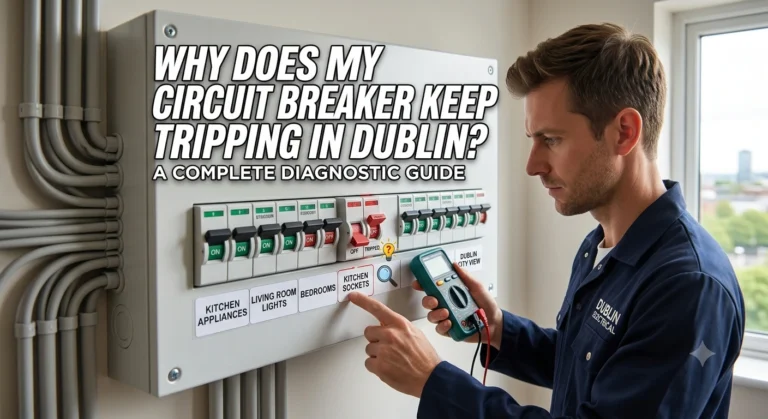
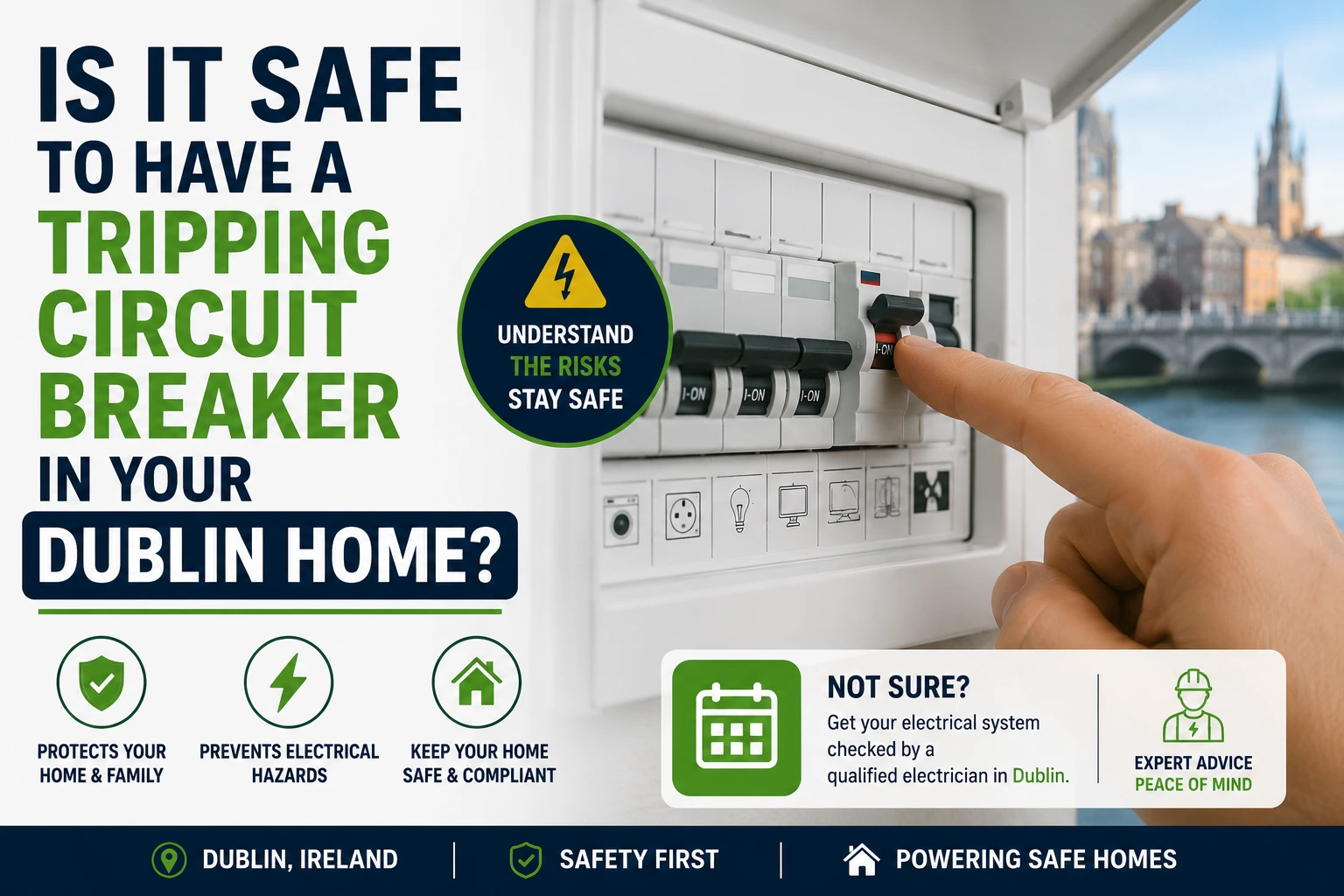
A single narrow switch that has flipped is an MCB trip, affecting only the specific circuit it protects. A larger central switch with a test button that has tripped is an RCD trip, which cuts power to every circuit grouped under it at once.
This distinction matters for urgency. An MCB trip on one circuit, holding after a single reset, is generally lower urgency than an RCD trip that will not reset at all, since the RCD is specifically designed to respond to conditions involving shock risk. If you want a full breakdown of what causes each type of trip and how to diagnose it safely yourself before calling anyone, our detailed guide on circuit breaker installation Dublin covers the most common causes step by step.
Frequently Asked Questions
Is it dangerous if my circuit breaker keeps tripping?
A single trip is safe and expected behaviour. Repeated tripping, especially without an obvious cause, indicates a genuine fault and should be professionally diagnosed rather than repeatedly reset.
Why does my breaker keep tripping with nothing plugged in?
This usually points to a fault in the fixed wiring itself, a failing appliance still drawing current even when apparently off, or a worn breaker that has become oversensitive. It should be diagnosed by an electrician rather than assumed to be nothing.
Is it safe to reset a tripped breaker myself?
Resetting once, after unplugging appliances on that circuit, is generally safe. If it trips again immediately or repeatedly, stop resetting it and call an electrician rather than continuing to force it back on.
Can a tripping circuit breaker cause a fire?
The breaker tripping itself is a safety response, not the fire risk. The real danger is a breaker that fails to trip when it should, allowing an overload or fault to continue and generate heat inside the wiring or consumer unit.
Why would a circuit breaker trip for no reason?
Common causes include a failing appliance creating an intermittent fault, deteriorated wiring insulation, a worn breaker nearing the end of its service life, or weather related earth faults affecting outdoor sockets and connections.
How many times can a breaker trip before it needs replacing?
There is no fixed number, but a breaker that trips repeatedly over a short period, or that will not hold after resetting, should be replaced regardless of its age rather than continuing to be forced back on.
Should I call an electrician for a single tripped breaker?
Not necessarily, if it trips once under a clear cause like an overloaded circuit and resets normally. If it trips repeatedly, will not stay reset, or involves any burning smell or unusual sound, call an electrician immediately.
Dealing With a Tripping Breaker in Dublin Right Now
If your breaker keeps tripping and you are not sure whether it is safe to keep resetting it, stop and call us rather than continuing to force it back on.
Call 353 8966 00243 for immediate assistance, available 24 hours across Dublin.
Full details on circuit breaker diagnosis and replacement across Dublin are available at Circuit Breaker Installation Dublin, and if you are dealing with a burning smell, sparking, or any active emergency right now, visit Emergency Electrician Dublin for immediate assistance.
Find us on Google Maps: emergencyelectrician-dublin.ie location